
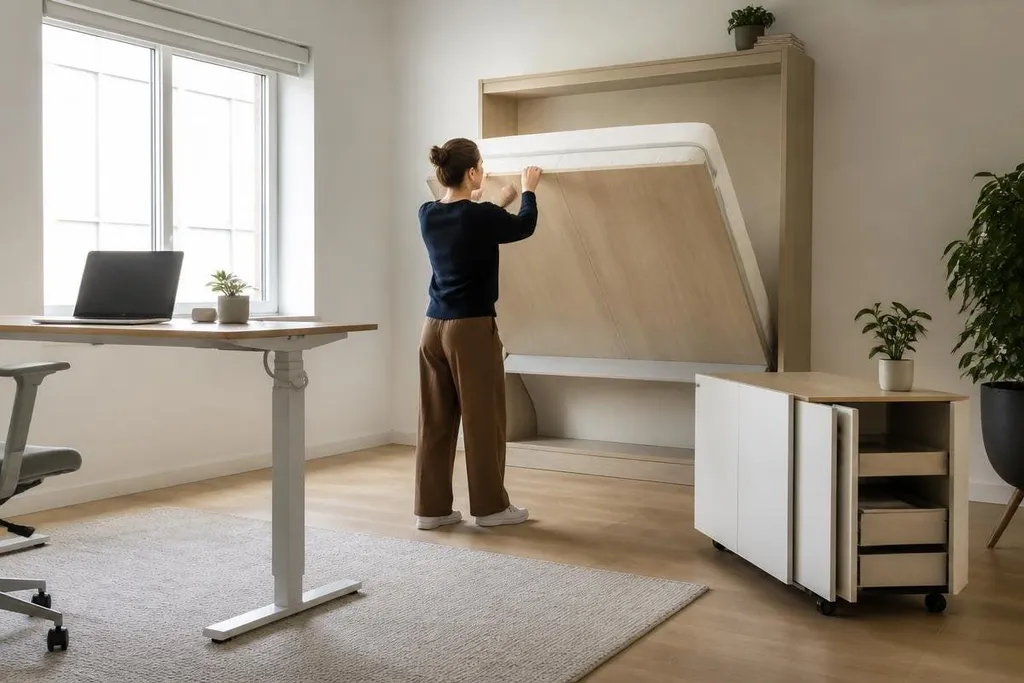
A table that changes height, a bed that folds itself away, or a cabinet that moves on command can sound like a robot. The harder question is what task the movement solves, and who will pay for it.
The topic is gaining attention, but the evidence supplied for this article contains no product names, prices, launch dates, sales figures, or workplace deployments. That leaves a useful line between a working machine and furniture with a motor inside.
- Movement must serve a task: A motor matters when it changes access, safety, storage, or comfort.
- Sensors make motion safe: Position sensing can stop a panel or frame before it reaches an obstacle.
- Proof needs real use: A video shows motion; a deployment shows whether the design keeps working.
What makes furniture robotic
Powered furniture has existed in forms such as adjustable desks and lift chairs. Robotic furniture adds control and sensing so the object can react to a command, a schedule, or a change around it.
A useful system needs several parts working together. Motors create movement. A controller decides when to move. Sensors report position or contact.
A frame carries the load without bending into the motor or trapping a hand. That last part matters more than the label. A desk that rises when you press a button is automated furniture. A desk that detects a person nearby, checks its position, and changes height without a direct command has a stronger claim to robotic behavior.
The same test works for beds, shelves, doors, and storage units. Ask what the object senses, what decision it makes, and what happens when a sensor fails.
Where the idea could help
Small spaces are an obvious use. A bed could move against a wall after use, leaving more floor area. A storage unit could bring a shelf down to a reachable height. A work surface could change position for a person who cannot safely lift or bend.
These uses have a clear link between movement and daily work. The product earns its motor when the action removes a repeated lift, reach, or transfer from the user’s routine.
Care settings raise the stakes. Furniture that moves a person or supports a transfer needs force limits, manual release, clear controls, and a safe state after power loss. A smooth demo does not answer those questions.
A chair that raises someone from sitting puts force through its frame, motor, and hinges. Reports at Robot24.com are most useful here when they show the mechanism, the test setting, and what happens when a part stops working.
The hard parts are under the surface
Furniture lives close to people. Its edges, hinges, cables, and moving panels sit within reach, often in rooms where children, pets, or visitors may enter without warning.
Noise also matters. A motor that sounds acceptable in a showroom may become tiring beside a bed or desk. Service matters too. If a drive fails, can a person move the furniture by hand? If the software stops responding, is the object still usable?
Power adds another limit. A product tied to a wall socket may work well in one room but fail as a flexible layout. A battery removes the cable, then adds charging, battery aging, and safe storage to the buyer’s list.
I’d skip any product that leads with automatic movement but gives no clear answer about manual release and failure recovery.
A buyer’s practical check
Use this list before you compare designs or approve a purchase:
- Name the task: Write down the repeated action the furniture must do.
- Check the load: Find the rated weight and compare it with the real object or person.
- Test the stop: Confirm that the controls stop motion at once.
- Ask about power loss: Find out what happens during an outage or dead battery.
- Plan service: Check access to replacement motors, controls, and cables.
- Watch the full cycle: Look for startup, movement, stopping, and manual recovery.
The category will earn its place when makers publish those details and show the furniture working outside a staged room. Until then, the useful measure is simple: does the machine remove a real task, and can a person still use the furniture when the motor stops?